Introduction
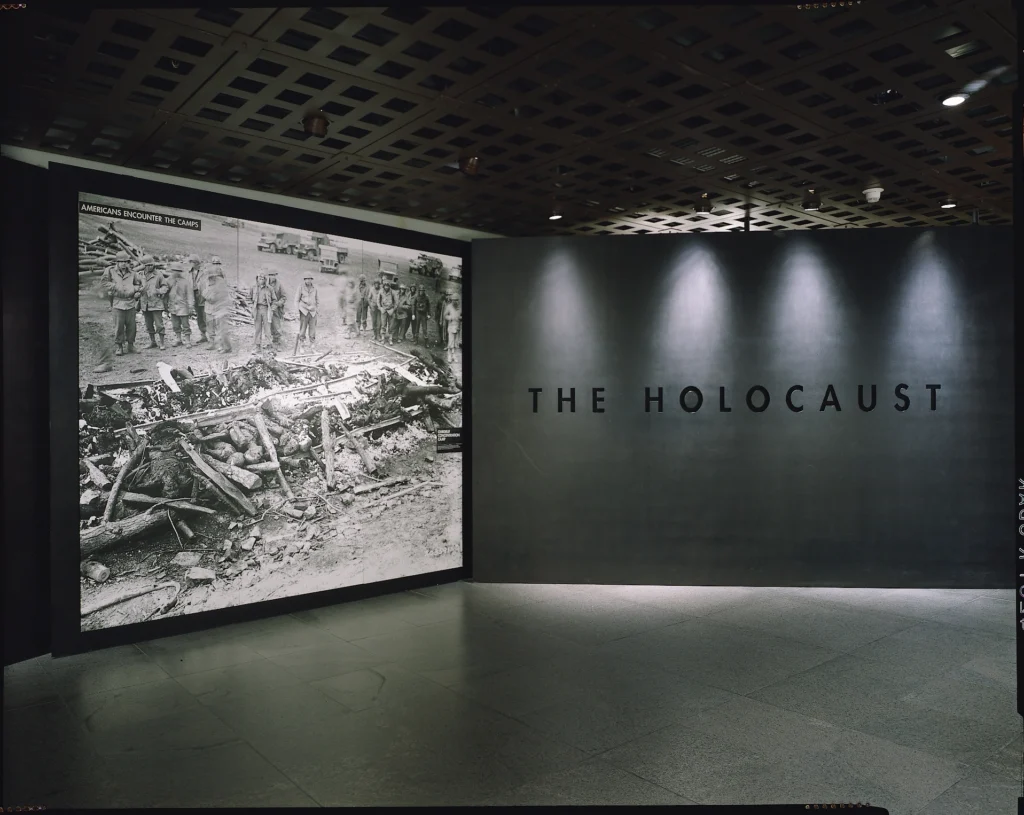
The United States Holocaust Memorial Museum serves as a living memorial to the Holocaust, and it teaches people to confront antisemitism, hatred, prevent future genocides, and promote human dignity.
Type of Sources
The types of sources that are used are mainly primary and some secondary. The primary source gives users access to firsthand testimony accounts like Oral Histories, also shows photos, artifacts, films, and books. Social media like Facebook, Twitter or X, YouTube and Instagram are also used to share information and events as a secondary source.
Usability
For the United States Holocaust Memorial Museum website, the navigation was somewhat easy to use, although you do have to click on Menu and after click on the sections and that will open more options for you to choose from. I didn’t mind it but if it was someone older who might not be familiar navigating the website then it could cause some confusion. But once I started looking into the collection’s highlights, I found some very interesting information of the “Deaf Victims of Nazi Persecution and the holocaust”, “500 years of antisemitic propaganda”, and “Filling a Visual Void: The Sobibor Perpetrator Collection” just to name a few. If you clicked on them, it opened a subsection of more informative information like Oral Histories, photographs, and artifacts. All three I mentioned were nicely organized and were easy to read and follow. I really liked the design, the colors also complimented the website and to me it seemed it was colorblind friendly too. The photos they added were very clear to see and not blurry at all so it was not straining on the eyes. Online exhibitions are also available and there’s plenty to choose from, and each one has a subsection that shows details and information to read. Another thing I found and I think really helps this website is that there’s a section to change the language and it lists 15 other languages to choose from. This project is user friendly to the public with the informative content it offers, but also if you’re a scholar there’s also a fellowship, conferences and workshops too.
Public history analysis
For me this digital project presents historical context to a wide audience which includes researchers, students, teachers, and the general public. The usage of Oral Histories, Photographs, artifacts, all draws in the audience. Their goal was to teach people to confront antisemitism, hatred, prevent future genocides, and promote human dignity and I think they did a great job in doing that.
Conclusion
In conclusion I thought the website was very well put together and easy to navigate. The color choice was also very nice and subtle because it’s colorblind friendly and it doesn’t strain the eyes. I liked exploring the sections because it opened subsections and, in those subsections, there was lots of information that could be useful to students, teachers, researchers and the casual museum visitor.
Works Cited
United States holocaust memorial museum. Accessed October 9, 2025. https://www.ushmm.org/collections/the-museums-collections/collections-highlights/500-years-of-antisemitic-propaganda.
United States holocaust memorial museum. Accessed October 9, 2025. https://www.ushmm.org/collections/the-museums-collections/collections-highlights/deaf-victims-of-nazi-persecution-and-the-holocaust.
United States holocaust memorial museum. Accessed October 9, 2025. https://www.ushmm.org/collections/the-museums-collections/collections-highlights/filling-a-visual-void-the-sobibor-perpetrator-collection.